


Failed Glass Repair Rectification
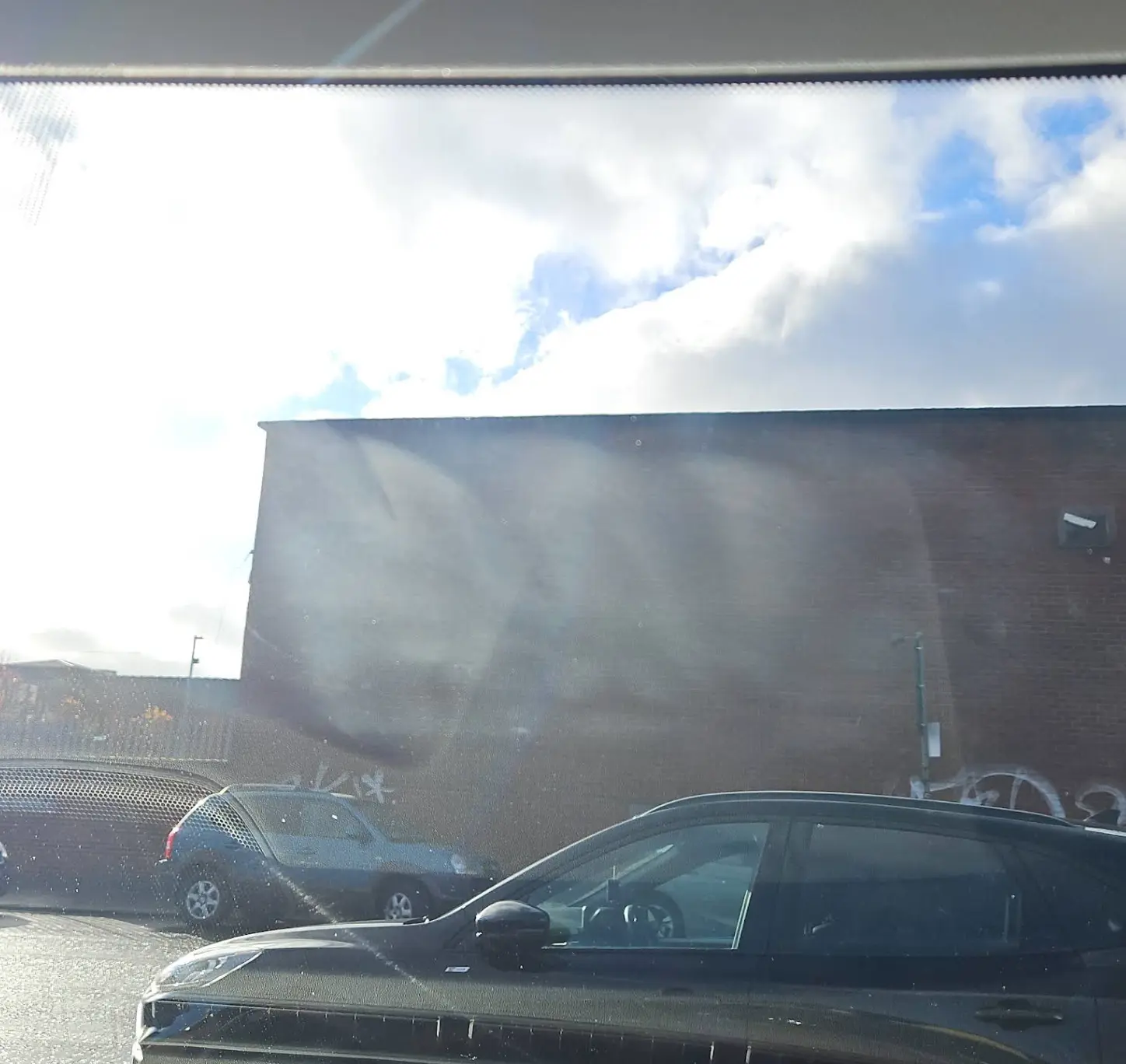
In some cases glass can appear worse after an incorrect repair attempt.
Haze, lensing, swirl marks or uneven reflections may remain even when the original scratch has been reduced.
Our rectification service focuses on restoring optical balance where possible and identifying when previous polishing has already exceeded safe correction limits.
Where recovery is not technically viable, we provide clear guidance on replacement options.
COMMON CAUSES OF FAILED GLASS REPAIR
– Uncontrolled polishing pressure or inconsistent pad movement.
– Incorrect abrasive sequence for the glass type or defect depth.
– Localised spot correction that leaves visible transition zones.
– Excessive material removal creating optical distortion or lensing.
– Overworking panels without checking optical results in real viewing conditions.
COMMON SIGNS OF FAILED GLASS REPAIR
– Visible halo or optical distortion around the repaired area in natural daylight.
– Swirl patterns or polishing trails visible under interior lighting.
– Localised waviness that distorts reflections through doors or windows.
– Inconsistent surface finish where one zone appears duller than surrounding glass.
– Previous spot polishing that leaves a visible boundary or transition line.
– Lensing effect where straight reflections appear bent through the treated area.
CAN A FAILED GLASS REPAIR BE CORRECTED?
Some failed repairs can be improved through careful blending and staged optical rebalancing.
Whether correction is possible depends on how much glass was already removed and whether optical distortion has exceeded acceptable limits.
If previous work has removed too much material or introduced significant distortion, replacement is often the most reliable option.
OUR GLASS REPAIR RECTIFICATION PROCESS
1. Existing repair zones are assessed for depth, optical distortion and remaining correction tolerance.
2. A staged correction strategy is defined to reduce visual imbalance without overworking the glass.
3. Controlled polishing passes carefully blend treated areas into surrounding glass.
4. Optical results are checked across multiple viewing angles and practical sight lines.
5. Where prior work has exceeded safe correction limits, replacement guidance is provided.
RECTIFICATION RISK MANAGEMENT
Rectification is highly case-specific because each failed repair attempt removes an unknown amount of glass from the surface.
The priority is controlled recovery of optical quality rather than aggressive polishing.
Where replacement is the safer technical option, we advise this early to prevent further material loss and repeated repair costs.
EXAMPLE PROJECT
Rectification following incorrect third-party polishing
Location: Perth
Issue: Residual haze and optical lensing after attempted third-party scratch removal
Replacement quote: £1,380
Rectification cost: £350
Client saving: £1,030
Time on site: 2.5 hours
Outcome: Optical balance improved and visible distortion significantly reduced without panel replacement.
FAILED GLASS REPAIR RECTIFICATION FAQ
Can all failed glass polishing attempts be corrected?
No. Some panels can be improved significantly, while others have already been overworked and are better replaced. A technical assessment determines the safest option.
What is the biggest risk after poor previous repair?
The main risk is optical distortion. Further uncontrolled polishing can worsen lensing effects and make replacement unavoidable.
Do you provide honest replacement advice if needed?
Yes. If rectification cannot deliver a reliable visual result, we advise replacement rather than attempting unnecessary additional polishing.
Can you assess from photos first?
Photos help with initial triage, but final viability is confirmed on-site because distortion and finish quality depend on viewing angle and lighting conditions.
Do you handle residential and commercial sites?
Yes. We rectify failed glass repair outcomes across residential, retail and commercial glazing projects throughout Central Scotland.
GLASS RESTORATION GUIDES AND COST ADVICE
Explore practical guides explaining when glass can be restored, typical costs, and when replacement may be required.
FAILED GLASS REPAIR? GET A TECHNICAL ASSESSMENT
Send clear photos of the affected glass and we will advise whether controlled rectification is still possible — or if replacement is the safer option.