


Glass Surface Contamination Removal
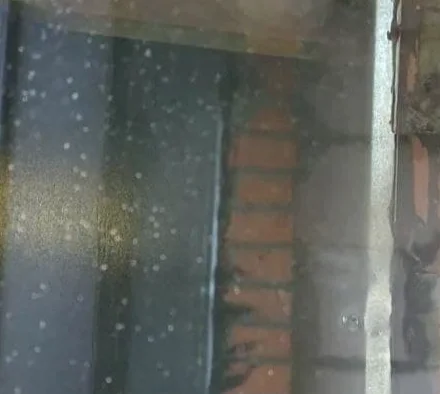
Not all glass defects are scratches.
Many panels lose clarity due to bonded surface contamination such as:
– hard-water mineral staining
– cement or construction residue
– environmental deposits
– post-build cleaning marks
These contaminants bond to the glass surface and cannot be removed with standard cleaning methods.
Our restoration process removes contamination while preserving the original glass finish and optical clarity.
WHAT CAUSES SURFACE CONTAMINATION ON GLASS
– Hard-water minerals repeatedly drying on the glass surface
– Construction residue such as cement haze, render dust or site debris
– Environmental deposits and traffic film on exposed glazing
– Overspray or fine construction dust bonding to the glass surface
– Improper cleaning methods that leave bonded surface deposits
COMMON SURFACE CONTAMINATION CASES
– Exterior glazing with persistent mineral spotting and run-off staining
– Construction glazing affected by cement haze, slurry or bonded site dust
– Commercial facades with traffic film and environmental residue build-up
– Residential windows and doors with long-term hard-water staining
– Newly installed glazing that appears cloudy after construction handover
CAN CONTAMINATED GLASS BE RESTORED
Many contamination issues can be restored when deposits remain on the glass surface and the underlying glass has not been permanently etched.
An assessment helps determine whether the contamination can be safely removed or if the glass surface has already been damaged.
If contamination has etched beyond practical restoration limits, glass replacement may be recommended.
In many cases restoration can significantly improve clarity and appearance without replacing the glazing.
HOW CONTAMINATION REMOVAL IS PERFORMED
1. The contamination type is identified to determine the safest restoration method.
2. Small test areas confirm the glass response before full restoration begins.
3. Controlled restoration and polishing stages are used to recover surface clarity.
4. The glass is checked for any permanent etching that may limit full restoration.
5. Advice is provided on how to reduce future contamination and staining.
GLASS RESTORATION VS REPLACEMENT
In many contamination cases, restoration can resolve clarity issues without replacing otherwise sound glazing panels.
Project time and cost depend on the contamination type, panel access, and the total affected area rather than a single fixed treatment rate.
If contamination has permanently etched the glass beyond practical restoration, glass replacement may be recommended.
EXAMPLE RESTORATION PROJECT
Facade glass contamination restoration
Location: Edinbrugh
Issue: Persistent mineral haze and bonded residue reducing glass clarity
Replacement quote: £1,150
Restoration cost: £250
Estimated saving: £900
Time on site: 2.5 hour
Outcome: Surface clarity restored to normal viewing standards without replacing the pane.
SURFACE CONTAMINATION REMOVAL FAQ
Can hard-water stains always be removed from glass?
Many can be removed or significantly improved. However, long-term mineral deposits can sometimes etch the glass surface. An assessment helps determine the level of restoration that can be achieved.
Is contamination removal the same as scratch restoration?
No. Contamination and scratches are different types of glass damage and often require different restoration methods. In some cases a combined restoration approach may be used.
Do you work on commercial facades and shopfront glass?
Yes. We carry out contamination removal for both commercial and residential glazing, including facades, shopfronts and large window panels across Glasgow and Central Scotland.
Will contamination return after treatment?
Contamination can return over time depending on environmental conditions and cleaning practices. We provide aftercare guidance to help maintain clarity and reduce future mineral buildup.
How do I request an assessment?
Send photos of the affected glass along with the approximate panel size and postcode. This helps us quickly advise whether restoration is possible and the likely next steps.
GLASS RESTORATION GUIDES AND COST ADVICE
Explore practical guides explaining when glass can be restored, typical costs, and when replacement may be required.
NEED CONTAMINATED GLASS RESTORED?
Send photos of the affected glass and a few site details. We will advise whether contamination can be removed and if restoration can avoid glass replacement.